
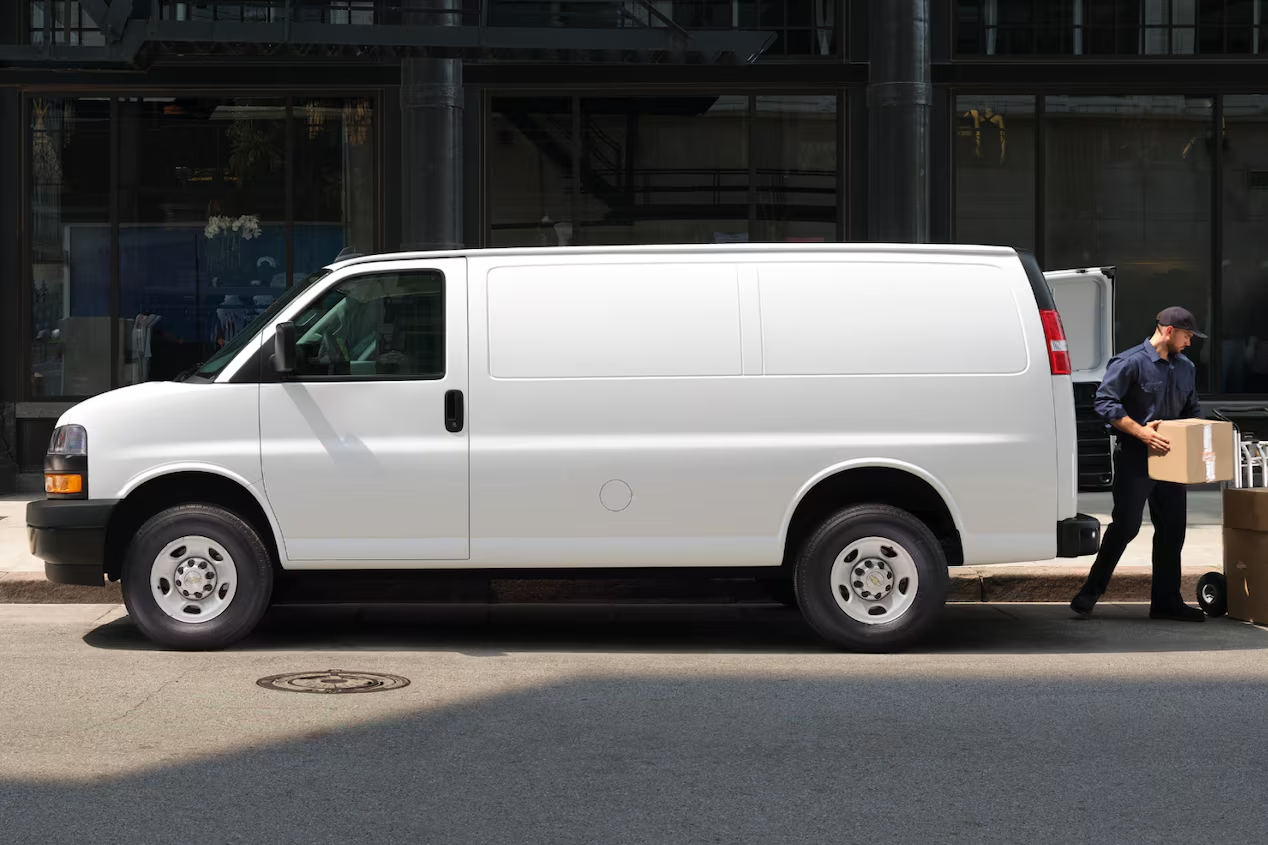
Cargo Van Insurance in Atlanta, GA: A Complete Guide for Georgia Businesses
If you run a delivery route through Buckhead, make service calls in Marietta, or haul equipment between job sites in Fulton and DeKalb counties, your cargo van is the backbone of your business. It is also one of your biggest financial exposures. A single accident on I-285 or a break-in outside a warehouse in Doraville can wipe out months of profit if you are not properly covered. That is why cargo van insurance is not optional for Atlanta business owners — it is the foundation that keeps your operation on the road and your income protected.
This guide walks through everything Atlanta-area business owners need to know about cargo van insurance, from Georgia-specific requirements to real-world pricing factors and money-saving tips, so you can make an informed decision before your next policy renewal or new business launch.
What Is Cargo Van Insurance?
Cargo van insurance is a commercial auto policy built specifically for vans used to transport goods, tools, equipment, or freight rather than passengers. Unlike a personal auto policy, which is designed for everyday commuting, this type of coverage accounts for the higher mileage, heavier use, and business-related risks that come with running a van for deliveries, courier work, contracting, or last-mile logistics.
Whether you drive a Ford Transit, Mercedes-Benz Sprinter, Ram ProMaster, or Chevrolet Express, the vehicle itself does not determine your coverage needs — how you use it does. A florist making local Atlanta deliveries has different exposures than an HVAC contractor hauling tools across metro counties, and both need a policy structured around their specific operation. That is the core value of a properly structured commercial policy: it is built around your business, not a generic template.
Why Atlanta Business Owners Need Cargo Van Insurance
Metro Atlanta is one of the busiest logistics hubs in the Southeast. Between Hartsfield-Jackson International Airport, the I-75/I-85 Downtown Connector, and the ever-expanding perimeter along I-285, thousands of cargo vans move through the region every day. That volume creates opportunity for delivery, courier, and service businesses — and it also creates risk.
Here are a few reasons cargo van insurance matters so much for businesses operating in and around Atlanta:
- Heavy traffic congestion. The Downtown Connector and I-285 regularly rank among the most congested corridors in the country, increasing the likelihood of fender-benders, rear-end collisions, and stop-and-go accidents.
- Higher theft and break-in rates. Fulton, DeKalb, and Clayton counties see elevated rates of vehicle and cargo theft, particularly for vans parked overnight near job sites or distribution centers.
- Severe weather exposure. Georgia’s spring storms, sudden downpours, and occasional ice events on overpasses can catch drivers off guard, especially on elevated interchanges like Spaghetti Junction.
- Contractual requirements. Many delivery platforms, general contractors, and property management companies require proof of commercial coverage before you can work with them.
- State minimum limits are rarely enough. Georgia’s minimum liability requirements are not designed for the six-figure losses that can result from a serious commercial accident.
For all of these reasons, cargo van insurance is one of the most important purchases a Georgia business owner will make — right alongside choosing the vehicle itself.
Georgia Requirements for Cargo Van Insurance
Georgia law requires every vehicle registered in the state, including commercial vans, to carry at least the following minimum liability limits:
- $25,000 bodily injury per person
- $50,000 bodily injury per accident
- $25,000 property damage per accident
These numbers may look sufficient on paper, but they fall far short of covering a serious multi-vehicle accident on a highway like I-20 or I-285, where medical bills, lost wages, and vehicle repair costs can climb quickly. Most Atlanta insurance agents recommend carrying commercial auto liability limits of at least $500,000 to $1,000,000, particularly if your van carries valuable cargo or if you contract with companies that set their own minimum insurance requirements.
If your van crosses state lines — say, delivering into Chattanooga, Tennessee, or Greenville, South Carolina — you may also fall under Federal Motor Carrier Safety Administration (FMCSA) rules, which can require an MC number, higher liability limits, and specific commercial filings such as proof of financial responsibility. A local Georgia agency familiar with both state and federal requirements can help you determine whether your operation needs interstate authority or can remain intrastate.
What Does Cargo Van Insurance Cover?
A well-built cargo van insurance policy typically includes several coverage types working together. Understanding each one helps you avoid gaps that could leave your business exposed.
Commercial Auto Liability
This is the foundation of any cargo van insurance policy. It pays for bodily injury and property damage you cause to others in an at-fault accident. Given Atlanta’s dense traffic and high vehicle count, liability coverage is where most claims dollars are spent, and it is the coverage most often required by contracts, landlords, and delivery platforms.
Physical Damage Coverage
Comprehensive and collision coverage protect your own van against collision damage, theft, vandalism, fire, and weather events. If your van is financed or leased, your lender will almost certainly require this coverage as a condition of the loan.
Motor Truck Cargo Coverage
If you transport tools, inventory, equipment, or goods belonging to a client, cargo coverage reimburses you if that freight is damaged, stolen, or destroyed in transit. This is especially important for contractors hauling expensive equipment or businesses delivering high-value merchandise across metro Atlanta.
Medical Payments and Uninsured Motorist Coverage
Georgia has one of the higher rates of uninsured drivers in the country. Uninsured/underinsured motorist coverage helps pay for injuries to you or your employees if you are hit by a driver who carries no insurance or not enough. Medical payments coverage helps with immediate medical costs regardless of fault.
Non-Trucking Liability and Hired/Non-Owned Auto
If your van is leased to a motor carrier or used by employees who occasionally drive their own vehicles for business errands, these endorsements close coverage gaps that a standard policy would otherwise leave open.
General Liability
Many Atlanta contractors and delivery operators pair their this coverage with a general liability policy to cover slip-and-fall incidents, property damage at a client’s location, and other non-auto business risks.
How Much Does Cargo Van Insurance Cost in Atlanta?
Pricing for cargo van insurance varies widely depending on your driving record, years in business, coverage limits, garaging location, and how the van is used. That said, Atlanta-area business owners can generally expect a range of a few hundred to over a thousand dollars per month for a well-rounded commercial policy, with the following factors driving cost up or down:
- Garaging ZIP code. Vans garaged in denser parts of Fulton and DeKalb counties often see higher premiums than those garaged in less congested suburban areas like Cherokee or Forsyth County, due to traffic density and theft statistics.
- Driving history. Clean motor vehicle records lead to significantly better rates on commercial van coverage than records with recent accidents or violations.
- Radius of operation. A van that stays within a 50-mile radius of Atlanta typically costs less to insure than one running long interstate routes, since exposure to varied road conditions and extended hours increases risk.
- Coverage limits and deductibles. Higher liability limits and lower deductibles raise premiums, while businesses that can absorb a larger deductible often reduce their monthly cost.
- Cargo value. Vans hauling high-value freight or specialized equipment typically require higher cargo limits, which increases the overall premium.
- Years in business and experience. New ventures sometimes pay more until they establish a claims history, while established Atlanta businesses with years of safe operation often qualify for preferred pricing.
An independent agency that shops your policy across multiple carriers is often the fastest way to find competitive cargo van insurance pricing, since rates for the same coverage can vary significantly from one insurance company to the next.
Atlanta and Metro Georgia Risk Factors That Affect Your Policy
Where you operate matters just as much as what you drive. Insurance carriers evaluate risk by geography, and metro Atlanta presents a distinct set of variables that shape both pricing and claims history for your policy.
Downtown and Midtown Atlanta: Dense stop-and-go traffic, frequent double-parking for deliveries, and high pedestrian volume increase the likelihood of low-speed collisions and liability claims.
I-285 (the Perimeter): As one of the busiest beltways in the Southeast, I-285 sees frequent multi-vehicle accidents, particularly during rush hour on the top and bottom ends near I-75 and I-85.
Spaghetti Junction (I-285/I-85 interchange in Gwinnett County): This complex interchange is notorious for congestion and sudden slowdowns, a common site for rear-end accidents involving commercial vehicles.
Fulton and DeKalb Counties: Higher population density correlates with elevated theft and vandalism rates for vans parked overnight, particularly near commercial corridors and distribution hubs.
Cobb, Gwinnett, and Clayton Counties: Rapid growth in these suburban counties has brought more delivery and service van traffic, along with construction-related congestion that can increase accident frequency.
Hartsfield-Jackson Airport corridor: Businesses running airport deliveries or courier routes face unique exposure from heavy commercial traffic and tight turnaround schedules.
A local agency that understands these Atlanta-specific patterns can help structure your cargo van insurance policy with the right limits and endorsements for where you actually operate, rather than applying a one-size-fits-all national template.
Common Mistakes Atlanta Business Owners Make With Cargo Van Insurance
Even experienced business owners sometimes leave gaps in their coverage. Here are mistakes we see often across metro Atlanta:
- Insuring a commercial van on a personal auto policy. Personal policies typically exclude business use entirely, meaning a claim could be denied outright if the insurer discovers the van was being used for deliveries or contract work.
- Underinsuring cargo value. Contractors often underestimate the value of tools and equipment stored in the van, leaving them underinsured after a theft.
- Skipping non-trucking liability when leased to a carrier. Owner-operators leased to a motor carrier sometimes assume the carrier’s policy covers them at all times, which is rarely true during non-dispatched personal use.
- Choosing the cheapest policy without reviewing exclusions. Low-cost cargo van insurance can carry higher deductibles, lower cargo limits, or exclusions that only surface after a claim is filed.
- Not updating coverage as the business grows. A business that started with one van and now runs three or four needs a fleet-structured policy, not three separate individual ones.
Avoiding these mistakes usually comes down to working with an agency that takes the time to understand your operation rather than selling a generic policy.
Tips for Lowering Your Cargo Van Insurance Premium
Georgia business owners can take practical steps to keep commercial van coverage costs manageable without sacrificing protection:
- Bundle policies. Combining your cargo van insurance with general liability or a business owner’s policy often unlocks multi-policy discounts.
- Install safety and tracking technology. Backup cameras, GPS tracking, and dash cams can reduce both claims frequency and premiums, since insurers view monitored vehicles as lower risk.
- Secure overnight parking. Storing vans in a locked, gated, or monitored lot overnight — rather than on the street — can meaningfully reduce theft-related claims and premiums in higher-risk Atlanta ZIP codes.
- Maintain a clean driving record. Enforcing safe-driving policies among employees who operate company vans keeps your claims history clean and your rates competitive.
- Choose the right deductible. Raising your deductible slightly can lower your monthly premium, as long as you keep enough reserve to cover it if a claim occurs.
- Review coverage annually. As your fleet, routes, or cargo values change, your cargo van insurance should be reassessed to make sure limits still match your actual exposure.
- Shop multiple carriers. Because underwriting appetite varies by company, comparing quotes across several insurers is one of the most effective ways to find the best rate for the coverage you need.
Cargo Van Insurance for Different Types of Atlanta Businesses
This type of coverage is not a one-size-fits-all product. Here is how coverage needs typically differ across common Atlanta industries:
Courier and last-mile delivery businesses: High mileage, frequent stops, and tight schedules mean liability and physical damage coverage are top priorities, along with cargo coverage for packages in transit.
HVAC, plumbing, and electrical contractors: These businesses often carry thousands of dollars in tools and parts, making cargo coverage and theft protection essential, especially for vans parked at job sites overnight.
Catering and food delivery services: Refrigeration equipment and food inventory inside the van may require specialized cargo endorsements beyond a standard policy.
Cleaning and janitorial companies: Vans loaded with equipment and supplies moving between multiple commercial properties throughout the day benefit from higher liability limits due to frequent stops in parking lots and loading zones.
Locksmiths, mobile mechanics, and field service techs: Specialized tools and equipment inside the van often carry high replacement value, making adequate cargo limits a priority.
Whatever industry you operate in, the right cargo van insurance policy should reflect your actual routes, cargo, and risk exposure — not a generic statewide average.
Why Work With a Local Atlanta Agency for Cargo Van Insurance
National call-center insurance sites can quote a policy in minutes, but they rarely understand the nuances of operating a van business in metro Atlanta traffic, Georgia’s uninsured motorist landscape, or the FMCSA rules that apply once you cross state lines. A locally focused agency brings a few distinct advantages:
- Familiarity with Georgia and Atlanta-specific risk factors, from I-285 congestion to county-level theft trends.
- Access to multiple carriers, allowing your agent to shop your policy across several companies rather than presenting a single quote.
- Faster support when you need a Certificate of Insurance, which many Atlanta property managers, contractors, and delivery platforms require before you can begin work.
- Ongoing policy reviews as your business grows from one van to a small fleet, so your coverage keeps pace with your operation.
At Atlanta Commercial Truck Insurance, we work with owner-operators, small fleets, and growing businesses across Atlanta, Fulton County, and the surrounding Georgia metro area. Our team shops your cargo van insurance across multiple carriers to find coverage that fits your budget and your actual operation, and we are available to help with DOT filings, Certificates of Insurance, and policy questions whenever you need us.
Seasonal Risks for Georgia Van Drivers
Metro Atlanta’s climate creates its own set of seasonal challenges for anyone driving a commercial van throughout the year. Spring brings frequent thunderstorms and occasional hail, which can pit windshields and dent body panels parked in open lots across Fulton, Cobb, and Gwinnett counties. Summer heat pushes tire pressure and engine temperatures higher, and the resulting afternoon downpours turn stretches of I-285 and the Downtown Connector into slick, high-risk driving conditions almost overnight. Fall brings shorter daylight hours, meaning more deliveries happen at dusk or after dark when visibility drops and pedestrian traffic around Midtown and Buckhead remains heavy.
Winter is the wildcard for Georgia drivers. Ice storms are infrequent but severe when they hit, and metro Atlanta’s hilly terrain and elevated interchanges, including the ramps near Spaghetti Junction, become treacherous almost immediately once temperatures drop below freezing. Because many local drivers have limited experience with icy roads, accident frequency spikes sharply during even brief winter weather events.
A locally based agency understands these seasonal patterns and can recommend coverage limits and deductibles that reflect the real risks Georgia van owners face throughout the year, rather than assumptions borrowed from a colder or milder climate.
Frequently Asked Questions About Cargo Van Insurance in Atlanta
Do I need commercial cargo van insurance if I only make local deliveries? Yes. Even short local routes within Atlanta expose you to liability, theft, and cargo risk that a personal auto policy will not cover once the vehicle is used for business purposes.
Is commercial van coverage more expensive than a personal auto policy? Generally, yes, because commercial policies account for higher mileage, business use, and cargo exposure. However, the cost is typically far lower than the financial risk of operating uninsured or underinsured.
Can I insure a cargo van under my homeowner’s or personal umbrella policy? No. Business-use vehicles require a commercial policy. Personal policies almost universally exclude commercial activity, which can result in a denied claim.
What happens if I lease my van to a delivery platform or motor carrier? You will likely need non-trucking liability in addition to your standard cargo van insurance to cover periods when you are using the van for personal reasons outside of dispatched work.
How quickly can I get a Certificate of Insurance in Atlanta? Many agencies, including ours, can issue a Certificate of Insurance the same day, and some offer instant online access so you can generate one whenever a client or property manager requests it.
Get a Cargo Van Insurance Quote in Atlanta Today
Your cargo van keeps your business moving through metro Atlanta’s busy streets, highways, and job sites every day. Making sure it is properly covered protects not just the vehicle, but your income, your equipment, and your ability to keep working after an accident or theft. Whether you operate a single van in Fulton County or manage a growing fleet across Cobb, Gwinnett, and DeKalb, the right coverage gives you the protection and peace of mind to focus on running your business.
Atlanta Commercial Truck Insurance is a locally focused agency serving owner-operators and fleets throughout Atlanta and the surrounding Georgia metro area. We shop multiple carriers to find cargo van insurance coverage tailored to your business, help with DOT and federal filings when needed, and offer fast Certificates of Insurance so you can stay compliant and on the road. Call us today at (770) 647-8393 or request an online quote to get started.
Get a quote now! Contact us here!

Leave a Reply